Haiku tunnel (carpal)
The typing finger
with carpal tunnel treatment
having writ, moves on
with carpal tunnel treatment
having writ, moves on
I'm intrigued by the notion of seeing as a metaphor for learning and for understanding. I'm also concerned about wisdom, how we apply our knowledge, and how we make decisions. So it caught my eye when Canadian blogger Dave Pollard mentioned that the word “wise” originally meant “to see”. The Online Etymology web site reveals
“to see,” hence “to know”
(see vision)
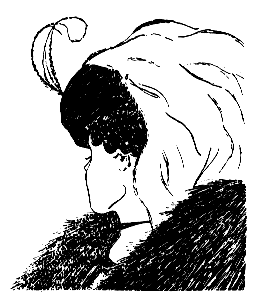 Have you ever been with other people while looking at one of those optical illusions? Have you ever been the one person who couldn't see what everyone else sees? It's frustrating! It's easy to suspect they're just playing a prank.
 It seems to me that our culture often tries to tell us there's only one thing that can be seen. Ever. If we see something else, well, we'd better keep it to ourselves. Our culture tells us, “This is a picture of a vase. It's only a vase. If you think you see something else in this picture, well, you're wrong! Because it's a vase.”
“He was constantly reminded of how startlingly different a place the world was when viewed from a point only three feet to the left.”
“Oh, they're just two sides of the same coin.”
Yeah, well, have you ever looked at a coin?
The sides are different.
There are three kinds of people in the world: those who can do math, and those who can't.
No? How about this:
There are 10 kinds of people in the world: those who can do binary math, and the other 01.
Hmmm...
There are two kinds of people in the world: those who don't believe in categorizing others, and ...
Doh!
----------
More at DavidBerreby.com ...
Books. I like 'em. I read a lot of them.
Often I recommend them to others. (Perhaps you noticed?)
Unfortunately I suspect my recommendations might be more effective if I could muster the willpower to write detailed, enthusiastic reviews. As much as I enjoy books, and as much I want others to appreciate the good ones, I greatly dislike writing book reviews. They remind me too much of book reports and school homework assignments.
Reading a book is fun. Writing about it takes time away from reading the next one.
As a kid in fourth grade I went on strike over book reports. I refused to write them. Specifically, I declined to participate in a classroom contest to try to write more book reports than the other kids. It seemed pretty clear to me that the contest was designed to get some (many?) of the kids to read more. The prospect of gold stars and smiley stickers on a wall chart (or the prize, whatever it was) didn't offer much incentive to me. I already averaged about four books checked out of the library at a time.
My civil disobedience prompted an emergency parent-teacher conference. Although I didn't exactly prevail, we did negotiate a concession: I agreed to stop setting an example of disobedience in exchange for the teacher's acknowledgement that the contest wasn't likely to advance my education.*
Now I have better incentive to write book reports reviews. I want other people to benefit from useful books as much I have. I want other people to read those books. But book reviews still feel like homework to me, and writing them does take time away from reading them.
Unfortunately the statement, “You should read this book because I say so”, doesn't seem to work very well.
I often think of books as tool boxes filled with idea tools. I have some background in engineering so that feels like a natural and obvious approach. For me, recommending a particular book is like recommending a particular tool for a particular task.
“Hi, there. I see you're pounding that nail with a brick. How's that workin' for ya? Have you considered a hammer instead? I just happen to have a hammer right here.”
Most models are wrong, but some are useful. Good books are full of ideas. Some of them are wrong, but some of them are useful. There are many I might recommend to a particular person in a particular situation. There are a few I recommend widely because they're especially versatile. These are my Swiss Army, Leatherman, toolbox-in-paperback, recommended books:
Welcome to this 85th example of the Tarheel Tavern. Our theme this week is setting an example. My friend and sustainability advocate, Chris, recently posted about the ways he demonstrates sustainable living. Like a blog meme, his example inspired me to think about the ways I try to demonstrate sustainable attitudes. It also reminded me of the theme of ...Slowly she turned, a regular Tavern participant who is slowly turning toward a new blog host.
I remember commenting earlier this summer that part of the value of her community gardening effort is to set an example. When I experienced one of those light-bulb-over-the-head moments three years ago I realized my best contribution would be to persuade other people to see value in sustainable living. The value of mowing my lawn with an electric mower is for my neighbors to see me doing it. The value of bringing my own reusable bags to the grocery store is for other shoppers to see me doing it. I'm very conscious that the value of this blog and my other Internet projects is for readers to see ordinary, real-life examples.
Mr. R., blogging at Evolgen, understands the value of teaching by example. He's also aware of the challenge of setting a good example consistently. As a science teacher he tries to inspire his students, but even the most dedicated science teacher can find it difficult to muster enthusiasm for nine straight weeks of nothing but dihydrogen oxide.
Writing Iddybud's Journal from the northern annex of Tarheel territory, Jude reflects on the challenge her mother faced and the influence of her mother's example. And she finds the sacred within the ordinary.
Mandie, approaching motherhood herself, sets an example of frenzied activity that makes me tired just to summarize it. Have you ever watched one of those home remodeling shows that recap a whole weekend of work in 30 seconds of frenzied sped-up video? Well, Mandie set that pace without the benefit of video effects. Picture a pregnant woman rebuilding multiple home appliances, cleaning gutters, jump-starting cars, constructing a corral, and taking crash courses in fire safety and plumbing 101, while eating chocolate and talking on the phone.
If that makes you tired, you might catch your breath while watching telenovelas en español at Pratie Place. Melinama describes a lifetime of bad behavior by the character of Doña Jacinta. (Viewing hint: "You know she's bad because she dresses in black and carries a cane.") Although the bad guy gal goes down in flames, some viewers wonder if Jacinta escaped too easily.
Real-life TV photographer (but not real name), Colonel Corn describes an interview with a rock star who sets an example by helping real life victims of abusive relationships.
A huge toxic waste fire in central North Carolina became a scary part of our real life this week. At Sustainability Southeast (another project in which I'm involved) we consider the example this sets: the example of our investment in our health and investment in our quality of life.
Over in western North Carolina, the Scrutiny Hooligans observe that a politician sets an example of “do as he says, not as he does”.
At the national level, the political example gets worse. A political operation that trumpeted its particular concept of moral standards recently discovered it doesn't live up to its own example. Ron takes issue with the search for scapegoats as he examines the Foley Fallout.
Thanks, everyone, for sharing your examples. Thanks for sharing what you care about.
Share what you care about.
That was the answer that energy and sustainability problem-solver Hunter Lovins offered when asked the challenging question, "What can I do?" She didn't hesitate before she replied, "Share what you care about."
That's the value of teaching, the value of parenting, the value of community gardening, and the value of blogging.
Thanks for sharing, and thanks for reading.
I know a guy who just bought a new car. He believes it's powered by squirrels. Just like in the cartoons. He believes there are squirrels under the hood that make his car go when they run frantically inside those exercise wheels meant for small pets. Every morning before he leaves for work he tosses a handful of nuts in the glove box to keep the squirrels running.
That fantasy ran out of gas, of course.
But he still believes. “Damn lazy squirrels!” he curses, pounding the hood.
“Damn lazy squirrels!”
I spend some of my time trying to persuade people. I want to persuade effectively, so I spend even more of my time thinking about how persuasion works, and how communication works, and sadly, how they don't work.
Arithmetic metaphor #1 is a warm-up, I suppose. It expresses my frustration at how much time and energy we can expend arguing about disconnected idealogies.
The second is about systems thinking -- understanding parts within the context of the whole. It's about remembering the bigger picture. When we understand the system of arithmetic we know it's absurd to reject one little part of it. Or we ought to know that. But how often do we reject one truth among many because it's just a little too unpleasant, a little too inconvenient, or little too scary? Does that make it go away?
I think not.
Finally, the third allegory is about how we demonstrate understanding...or not. During a conversation via blog comments elsewhere I asked participants how we might demonstrate to each other that we really understand each other's views. “Repeat the other person's argument back to him or her”, was the only reply I received.
That reply left me frustrated and dissatisfied, although it took me a long time to figure out why. For one thing, I was trying to carry on a conversation, not an argument. And the reply felt like a lecture. I know the basics of active listening. Most of us do. Repeating statements is fine; it's useful; it helps to confirm accuracy. But that's all it signifies.
That's not what I really want. Mere acknowledgement isn't very satisfying. I'd rather see an indication of understanding. And to me that means demonstrating that we have incorporated new information into our own thinking.
If I hand someone a message written on a puzzle piece, I hope to see that piece added to the puzzle. Could we at least try, before declaring it doesn't fit or simply ignoring it? Saying “thanks for the blue puzzle piece” while stuffing it into one's pocket, never to be considered again, that's not a demonstration of understanding. That's not why I deliver messages like puzzle pieces. Puzzle pieces belong in a puzzle, assembled, not in the linty darkness of a pocket.
Parroting words back and forth is a social ritual. It has value, but it's transient, fleeting. Demonstrating that we really understand the messages we exchange, that we can fit new pieces into our puzzle, that has lasting value. That's how we establish shared meaning. That's how we begin to make progress. That's how we create the world we want.
2 + 2 = 3
And because 2+2=3 blah blah blah...
Are you kidding?! That's stupid! Everybody knows 2+2=5!
Don't you see? This untruth is ever so much better than that untruth.
Ha! So there!
2 + 2 = 4
Duh.
3 + 3 = 6.
Okay, sure.
Also 4 + 4 = 8, and...
Whoa! Eight! No, see, I've got a problem with 8.
A problem with 8?
Yeah, I'm okay with that other stuff, but 8....I just don't think so.
Some truths seem inconvenient, indeed.
Yeah, whatever. Hey, can we argue some more about 2+2=5 or 2+2=3?
... And therefore we can conclude with certainty that 2+2=5, and...
Um, don't you mean four? 2+2=4?
Yes, yes, of course. Obviously so. Now, as I was saying: Because 2+2=5, it must also be the case that...blah blah blah...
(sigh)
 As I mentioned earlier, the theme of this 77th week of the Tar Heel Tavern is "the future". I like to have a theme when I host the Tavern here. It helps me to frame the pieces that I receive within the context of my blog. I realized as I looked over this weeks' contributions that the future is really about connections between the past, the present, tomorrow, and generations to come. It seems to me we construct narratives, stories, to make sense of those connections.
Here's my constructed narrative, an attempt to connect eleven views of past, present, and future.
Colonel Corn carries a camera, and he knows something about constructing clever narrative. Cuz that's his career. His day night job involves documenting events in the present to show in the near future of nightly news. Here's his description of a night's work to construct a narrative while events unfolded.
Apparently the news narrative in Greensboro is cooked up in Mel's Kitchen. One of Mel's colleagues at the News & Record attempted to eat his way into a motorcycling future in a contest outside Moe's kitchen. Consult the menu at Mel's Kitchen for narrative and contest results. Meanwhile Mr. Ogre searched for a view into the future. He was astonished to discover his own past, especially when it turned out to be a past view of his future. Or maybe our popular mechanical future. Or a future past. But it's really none of those things. Confused? Mr. Ogre explains...
Billy, the blogging poet, also has a popular mechanical future in mind. As if blogging, writing poems, and flying the streets of Greensboro isn't enough to keep him busy in the present, he announces a new project. With reader assistance yet another unforgettable flying object soon will hover in range of photo opportunities.
Regular readers of another of the Tavern's blogging poets know that Erin's blog has been time-traveling into the future. A post from Sept. 16, 2006 floats at the top of Poetic-Acceptance, waiting for the rest of us to arrive. On that day Erin's effort to raise money to support the American Heart Association's research into congenital heart defects will culminate with the Charlotte-Metro Heart Walk. She's very excited to announce a sponsor for her walking team. Click, and your future could include a portrait by a professional photographer...
Walk? Coturnix zooms! The Tavern's long-time science blogger continues to post at a frenetic pace. This week it seems he's mostly examined history. Apparently his Blog Around the Clock runs backward sometimes. Fortunately our patented future filter can extract a couple of thematic items anyway. Here's a brief item about possible beneficial changes in the practice of science research, and here's one about disruptive changes due to global warming.
From long timer to short timer: A recent arrival to our blogging future, Mr. R. asks some big questions about raising his future children.
The big question I ponder is, "How do we transform our culture into a sustainable one?" Over at the upper right of this page is a tag line, "sustainability is an attitude". It's about how we think, what we value as individuals, what we value as communities, and what we value as a culture.
At Fixin' Healthcare Marcus considers health as a matter of attitude. It's about "change in behavior" and "change in thinking", he writes.
Laurie, at Slowly She Turned, is also interested in attitude, values, and changes in behavior. Her thoughts on civility reflect my experiences and my concerns. And, uncomfortably, I know I haven't always lived up to my own standard. It seems to me that being mindful of our behavior in the present relies heavily upon our ability to predict the consequences of our behavior in the future. Perhaps we live with one foot in the present and one foot in the future, even if we don't always notice that stance.
Justin's stance on the North Carolina Research Campus is enthusiastic and unequivocal. The View From The Cheap Seats looks upon his vision of the future of Kannapolis.
Further west at the home of Scrutiny Hooligans, Screwy Hoolie looks ahead to November. He listened to an Asheville area Congressional candidate speak about the present and the future. His transcript concludes with this conversation with a wise grandmother:
"When's the best time to plant a tree?"
"Grandma, I have no idea."
She said, "It was thirty years ago....When's the second best time to plant a tree?"
"I don't know, Grandma."
She said, "Today."
I like how Grandma thinks. That's a narrative that links the past and the present to the future.
The theme of the 77th week of the Tar Heel Tavern is "the future". The theme fits this blog: thinking about sustainable culture involves thinking about the future. But it's difficult to think about the future without also thinking about the present, of course. We try to make sense of the flow of past and present into future by constructing a narrative.
Today I'm assembling a narrative from a double handful of contributed pieces. It's a puzzle, a challenge, a new story to write today because I decided to look for Perseid meteors last night.
First, coffee. Then, narrative. Later, the future.
Watch this space!
Greensmile asked whether the word “meme” comes from “Me me!” Susan Blackmore, who studies memes and writes extensively about them, might agree that it does, in a way.
A meme is an idea that spreads. That's my working definition, a model I find useful. It's an inexact copy of Susan Blackmore's definition. Meme ideas spread by imitation, by exact copying and inexact copying. Memes can be melodies, catch-phrases, stories, clothing fashions, and ways of making pots. Many memes spread unintentionally in the course of casual conversation and story-telling. Bloggers deliberately spread some memes as ways to inspire new posts.
I like this particular blog meme. It offers opportunities to think about books that influence our lives.
1. One book that changed your life?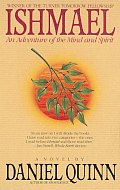
The Story of B, by Daniel Quinn.
Ishmael would have worked, too, but it was not on the library shelf that day. Both are entry points to a library of astonishing insights into our culture's operation.
2. One book you have read more than once?
The Shockwave Rider, by John Brunner. It was also the book that changed my life the first time, and one of many that created a context to understand and to value the ideas of Daniel Quinn, Peter Senge, and George Lakoff.
3. One book you would want on a desert island?
Some big, thick anthology of relatively recent literature, such as the one I bought for an American Lit class a couple of decades ago.
A number of meme writers already have mentioned practical books about desert island survival. I'll figure out the edible plants by cautious tasting. I'd rather share an indefinite future with e e cummings and Stephen Crane and Mark Twain.
4. One book that made you laugh?
The River Why, by David James Duncan. I'd quote some funny bits, but my copy is loaned out.
5. One book that made you cry?
That I don't remember distinctly. But this might be a good time to mention The Cider House Rules, by John Irving.
6. One book you wish had been written?
Initially I misread that as a book I wish I, personally, had written. And that would be Meet Me in the Moon Room, by Ray Vukcevich. I can't even describe how wonderfully Vukcevich writes, but this guy tries...
As for a book that should have been written by somebody, anybody, how about What If This New Way of Life Doesn't Work Out?, by Jared Diamond's great great 500-generations-ago grandmother.
7. One book you wish had never had been written?
To mention it would be to spread its meme. Why dignify it?
Other meme writers have mentioned books that seem to inspire legions of readers to behave badly. We all know the adage about judging books by their covers. I do find some value in judging books by their readers.
8. One book you are currently reading?
I sometimes borrow a backpack full of books at one time from a nearby university library. The nonfiction ones I graze for good ideas. The fiction I read to be impressed by writing style, such as The Toughest Indian in the World, by Sherman Alexie.
9. One book you have been meaning to read?
Tempered Radicals: How Everyday Leaders Inspire Change at Work, by Debra Meyerson.
10. Now tag five some other people...
Chris H.
John Kessel, science fiction author and SF critic and NC State professor. He's not likely to see this, and his web site isn't really a blog, but memes are often inexact copies...
11. (These go to eleven.) What about Zen and the Art of Motorcycle Maintenance?
Indeed. Now we are enlightened.
----------------------------
Want to check out a book before buying? Please support your local library. (And don't forget about inter-library loans.)
[Update Jan. 13, 2008, for NPR puzzle folks: No, I can't find it either! The funny Scrabble site, that is. But since that seems a dead end, and you're already here, why not stick around, click around, and read some more? Cheers]
For some time I've planned to write an essay framed by the metaphor, "the tip of an iceberg". I planned to include a photo of an iceberg that's been floating around the Internet for years.
I haven't finished that essay. I ponder a lot and write slowly. In the mean time, NPR beat me to it.  Well, sort of. The NPR segment, "Language: What Lies Beneath", does cover a topic that interests me, and one I've written about briefly. But NPR's web graphic is based on exactly the iceberg image I planned to use. For me this image, created by photographer Ralph Clevenger, expresses the visual metaphor of the tip of an iceberg just as I see it in my mind. How about you?
Language: What Lies Beneath at NPR.org
Update: Eventually I did write another "tip of the iceberg" essay. It can be found at my other web site, BluePuzzle.org/iceberg
Suppose we're driving, and we approach a large barricade with a sign that says,
How do these three puzzle pieces fit together?
Information
Knowledge
Wisdom
How do we tell them apart? How do we acquire them? How do we apply them?
Have you ever felt the pinch of a finger trap puzzle?
A finger trap looks harmless. It's just a small tube made of paper. Perhaps a jokester friend handed one to you and said, "Here...stick your fingers in this thing, then pull them out." How hard can that be?
So you play along, stick your fingers into the tube, pull, and find your fingers stuck. Trapped. Pinched.
Also puzzled, and probably frustrated, most of us react by pulling harder. Getting our fingers out must involve pulling, right? So we pull harder. And the finger trap pinches tighter.
The secret of the finger trap is our belief that pulling harder ought to work. But pulling harder doesn't work; that's what makes it a trap. The solution to escape the finger trap is to push gently first. Pushing into the tube releases its pinch. Only then can we carefully remove one finger at a time.
Escaping a finger trap isn't just a matter of pushing, though. It's also a matter of understanding first how the trap works. First we need insight into its mechanism. When we discover our initial belief works badly, that pulling harder pinches tighter, then we adjust our belief to accomodate a method that works.
Or...not.
Reading the news, hearing the news, watching the news, how many of those stories are about pulling harder on traps that are pinching tighter? Why does it seem so difficult to accept that pulling harder pinches tighter? If it didn't work yesterday, and it's not working today, why believe that pulling harder might suddenly work tomorrow?
A finger trap is just a toy, and its mechanism seems simple. So it's no big deal to adjust our belief about how it works.
If we believe that life is hard, that life is complicated, that there are no easy answers, that a lifetime of effort to pull harder must be rewarded, then a simple solution like, "Push gently," can seem disappointing. Judging by the news, apparently we believe that difficult problems deserve difficult solutions.
There are plenty of times when we claim we seek easy answers. When offered simple solutions, however, how often do we reject them by saying, "Well, that can't be right!" ?
The secret to escape a finger trap is to understand it first. Insight into the mechanisms that trap us leads to solutions that actually work. What we believe about the mechanisms of our world make a huge difference in our ability to live freely--or to feel pinched tightly in a giant finger trap.
---
Peter Senge's book, The Fifth Discipline, offers a remarkable source of insight into difficult situations and insight into beliefs that can trap us.
The Sustainability Institute is one organization that applies the same thinking to encourage solutions to global challenges.
To see how this piece fits related pieces please visit BluePuzzle.org.
How would we live if the phrase, "And we all live happily ever after," begins a new story?
We're accustomed to seeing a similar sentence at the end of stories. It seems to function there as a perfunctory wrap-up, tacked on mostly as a story-telling ritual.
It seems to me there's always another story unfolding, however, or a new one that's about to begin. Instead of perfunctory endings, what if we focus on setting the precedent for the quality of our lives from the beginning?
How would we live if beginnings justify means?

