Showing posts with label Books. Show all posts

Friday, June 18, 2010

Jose Saramago sees no more

Jose Saramago, whose books, The Cave and Blindness, I found remarkable and worth reading, has passed away.

This observation,

  Fighting has always been, more or less, a form of blindness

struck me as an important insight, and it has prefaced one of my web essays since I first read it.

Though sad, perhaps this news will inspire new readers to look up his work.

Monday, August 04, 2008

Wisdom looks toward the future

These days people seek knowledge, not wisdom.
Knowledge is of the past;
wisdom is of the future.

Vernon Cooper,
Lumbee elder


Perhaps this puzzle piece connects to another from two years ago: Information, Knowledge, Wisdom

Wisdomkeepers: Meetings with Native American Spiritual Elders

Saturday, January 19, 2008

Amusing Ourselves to Death

I've mentioned this book several times recently in comments elsewhere. It occurred to me that I should mention it at my own web site, too:

Amusing Ourselves to Death: Public Discourse in the Age of Show Business
by Neil Postman

If TV news and talk radio leave you feeling something other than well-informed, Postman's little book might explain why.

Thursday, August 16, 2007

A few books I've mentioned elsewhere

In the course of commenting at other blogs and web sites I've mentioned some books that I have not yet listed here. For the sake of posterity and future reference I thought I should consolidate them in this quick list.

Disclaimer: I mention these because I have found them useful. Other than that, what passes for a running joke around here is my oft-repeated assertion that I don't do book reviews.

The Tipping Point, by Malcolm Gladwell.
This little book really deserves a post of its own. Someday it will get what it deserves.

Blessed Unrest: How the Largest Movement In the World Came Into Being and Why No One Saw it Coming, by Paul Hawken
Never judge a book by its cover ... only by its subtitle. This is a new one from Paul Hawken, an influential thinker in the sustainability field. The subtitle suggests to me that he might address an issue mentioned in another book:

The Cultural Creatives, by Paul Ray and Sherry Anderson
The authors describe a large group of Americans, tens of millions, characterized by a kind of counter-cultural creativity and the feeling that they're totally alone in their views. For me it was worth skimming for tidbits like that, but some portions of the book didn't grab me. Their work does complement the work of others, though, such as Hawken.

Urban Tribes, by Ethan Watters
Another mixed bag. It's really two books in one cover. I found much value in the first half, which is about an unexpected phenomenon that the author discovered while trying to write the second half.

Gaviotas, by Alan Weisman
Weisman describes an extraordinary village, Gaviotas, that really ought to be utterly ordinary. For 95% of human history, it was utterly ordinary. I had the great good fortune to meet Paolo Lugari, founder of Gaviotas. Like the village, Lugari is extraordinary, but we really ought to make people like him utterly ordinary.

Beyond Civilization, by Daniel Quinn
Some folks have trouble "getting" this one. I recommend reading it along with Urban Tribes and Gaviotas. These three pieces connect very neatly, and the examples in the other two help to make this one more understandable.


More pieces assembled at BluePuzzle.org/books ...

Friday, May 04, 2007

Saramago's observation of conflict


Fighting has always been, more or less, a form of blindness.


A quote from Blindness, by Jose Saramago.


Friday, April 06, 2007

Vine Deloria, Jr., a career summary and a play in one act

Recently I began reading some books by native American Indian author Vine Deloria, Jr. So far I enjoy his unorthodox approach and his playful, witty, and provocative style. I find value in his apparent role as trickster. I think I see what he wanted his readers to see.

Not everyone appreciates the role of trickster as teacher, however, especially outside of native cultures. As I do some more research about the man I notice that some of the folks who criticize him seem mostly baffled by his unconventional perspective. It occurred to me that Vine Deloria, Jr.'s career might be summarized in a very brief one act play...

Vine Deloria, Jr.: I reject the rules of white culture.

Critics: Goshdarnit, Deloria! You're not playing by our rules!

Vine Deloria, Jr.: No kidding.


Since I have previously declared that I don't do book reviews, this certainly should not be construed as one. I'm just noting another instance of personal perspective on culture, another illustration of faces and vases, of icebergs and the illusion of communication.

Yup, that's all, really.

Tuesday, February 13, 2007

Two worth reading

We shall not cease from exploration
And the end of all our exploring
Will be to arrive where we started
And know the place for the first time.


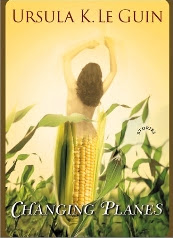
Changing Planes cover I've been planning to recommend Ursula K. Le Guin's delightful book, Changing Planes, since I discovered it a few weeks ago. The reward for procrastination is an opportunity to pair it with Jose Saramago's unusual book, The Cave.

Changing Planes presents itself as a sly travelogue, a collection of short stories that describe some of the planes of existence a traveler can reach after experiencing the peculiar combination of stress, boredom, and indigestion that occurs only in a modern airport.

The book's back cover blurb observes that Le Guin's stories of exotic places and peoples all reflect the here and now of 21st century life. Most notable for me were the perpetually annoyed and squabbling people of Veks, the reckless genetic experiments on Islac, the thoughtful people of Ansarac who took some bad advice but abandoned it for their own time-tested wisdom, and the sad holiday island of Great Joy.

While searching Le Guin's web site for supplementary links I noticed her recommendation of Nobel prize-winner Jose Saramago's books, Seeing, Blindness, and The Cave. The titles Seeing and Blindness caught my eye because I've written a bit myself about seeing and not seeing. Saramago's writing style may challenge us, but readers who appreciate William Faulkner's page-long streams of consciousness should be equally comfortable with Saramago's technique. What Saramago's charming characters discover deep within The Cave is both disturbing and liberating:

They are us!


----------------------------------------------------------

The Cave and other books by Jose Saramago are available from Powell's and from local bookstores

Ursula K. Le Guin's web site is worth exploring

“We shall not cease from exploration...”
quoted from Four Quartets, by T.S. Eliot


Thursday, October 19, 2006

I don't do book reviews

Books. I like 'em. I read a lot of them.

Often I recommend them to others. (Perhaps you noticed?)

Unfortunately I suspect my recommendations might be more effective if I could muster the willpower to write detailed, enthusiastic reviews. As much as I enjoy books, and as much I want others to appreciate the good ones, I greatly dislike writing book reviews. They remind me too much of book reports and school homework assignments.

Reading a book is fun. Writing about it takes time away from reading the next one.

As a kid in fourth grade I went on strike over book reports. I refused to write them. Specifically, I declined to participate in a classroom contest to try to write more book reports than the other kids. It seemed pretty clear to me that the contest was designed to get some (many?) of the kids to read more. The prospect of gold stars and smiley stickers on a wall chart (or the prize, whatever it was) didn't offer much incentive to me. I already averaged about four books checked out of the library at a time.

My civil disobedience prompted an emergency parent-teacher conference. Although I didn't exactly prevail, we did negotiate a concession: I agreed to stop setting an example of disobedience in exchange for the teacher's acknowledgement that the contest wasn't likely to advance my education.*

Now I have better incentive to write book reports reviews. I want other people to benefit from useful books as much I have. I want other people to read those books. But book reviews still feel like homework to me, and writing them does take time away from reading them.

Unfortunately the statement, “You should read this book because I say so”, doesn't seem to work very well.

I often think of books as tool boxes filled with idea tools. I have some background in engineering so that feels like a natural and obvious approach. For me, recommending a particular book is like recommending a particular tool for a particular task.

“Hi, there. I see you're pounding that nail with a brick. How's that workin' for ya? Have you considered a hammer instead? I just happen to have a hammer right here.”


Most models are wrong, but some are useful
. Good books are full of ideas. Some of them are wrong, but some of them are useful. There are many I might recommend to a particular person in a particular situation. There are a few I recommend widely because they're especially versatile. These are my Swiss Army, Leatherman, toolbox-in-paperback, recommended books:


Each of those three is really a subset of the author's ideas. Each author has body of related work — more toolboxes filled with more tools — but those three are immediately useful.

I know I should say more, of course. But I'd rather be reading.


---

* I give my 4th grade teacher, the late Mrs. Harder, a lot of credit for her unusually candid admission.

More book recommendations with inadequate reviews...


Saturday, August 05, 2006

A book meme

Greensmile asked whether the word “meme” comes from “Me me!” Susan Blackmore, who studies memes and writes extensively about them, might agree that it does, in a way.

A meme is an idea that spreads. That's my working definition, a model I find useful. It's an inexact copy of Susan Blackmore's definition. Meme ideas spread by imitation, by exact copying and inexact copying. Memes can be melodies, catch-phrases, stories, clothing fashions, and ways of making pots. Many memes spread unintentionally in the course of casual conversation and story-telling. Bloggers deliberately spread some memes as ways to inspire new posts.

I like this particular blog meme. It offers opportunities to think about books that influence our lives.


1. One book that changed your life?
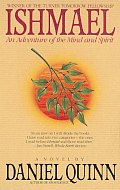

The Story of B, by Daniel Quinn.

Ishmael would have worked, too, but it was not on the library shelf that day. Both are entry points to a library of astonishing insights into our culture's operation.


2. One book you have read more than once?

The Shockwave Rider, by John Brunner. It was also the book that changed my life the first time, and one of many that created a context to understand and to value the ideas of Daniel Quinn, Peter Senge, and George Lakoff.


3. One book you would want on a desert island?

Some big, thick anthology of relatively recent literature, such as the one I bought for an American Lit class a couple of decades ago.

A number of meme writers already have mentioned practical books about desert island survival. I'll figure out the edible plants by cautious tasting. I'd rather share an indefinite future with e e cummings and Stephen Crane and Mark Twain.


4. One book that made you laugh?

The River Why, by David James Duncan. I'd quote some funny bits, but my copy is loaned out.


5. One book that made you cry?

That I don't remember distinctly. But this might be a good time to mention The Cider House Rules, by John Irving.


6. One book you wish had been written?

Initially I misread that as a book I wish I, personally, had written. And that would be Meet Me in the Moon Room, by Ray Vukcevich. I can't even describe how wonderfully Vukcevich writes, but this guy tries...

As for a book that should have been written by somebody, anybody, how about What If This New Way of Life Doesn't Work Out?, by Jared Diamond's great great 500-generations-ago grandmother.


7. One book you wish had never had been written?

To mention it would be to spread its meme. Why dignify it?

Other meme writers have mentioned books that seem to inspire legions of readers to behave badly. We all know the adage about judging books by their covers. I do find some value in judging books by their readers.


8. One book you are currently reading?

I sometimes borrow a backpack full of books at one time from a nearby university library. The nonfiction ones I graze for good ideas. The fiction I read to be impressed by writing style, such as The Toughest Indian in the World, by Sherman Alexie.


9. One book you have been meaning to read?

Tempered Radicals: How Everyday Leaders Inspire Change at Work, by Debra Meyerson.


10. Now tag five some other people...

Chris H.

John Kessel, science fiction author and SF critic and NC State professor. He's not likely to see this, and his web site isn't really a blog, but memes are often inexact copies...


11. (These go to eleven.) What about Zen and the Art of Motorcycle Maintenance?

Indeed. Now we are enlightened.


----------------------------

Want to check out a book before buying? Please support your local library. (And don't forget about inter-library loans.)

 

Saturday, April 15, 2006

Another useful book

Shoveling Fuel for a Runaway Train, by Brian Czech; a quick and easily readable exploration of the assumptions underlying our nearly universal belief in "economic growth"

Friday, March 31, 2006

Books I've found helpful...

The Fifth Discipline, and
Presence,
both by Peter Senge (et al)

Metaphors We Live By, and
Moral Politics,
both by George Lakoff

Ishmael,
The Story of B,
Beyond Civilization,
by Daniel Quinn

Leadership Without Easy Answers,
Ronald Heifetz

Memorable fiction I've enjoyed

and listed in no meaningful order...


    253 (the print remix), Geoff Ryman; 253 characters on a brief, memorable journey; a fascinating, innovatively structured anti-novel, orginally composed online at ryman-novel.com

    Catch 22, Joseph Heller; hilariously tragic cultural criticism

    The Hitchhiker's Guide to the Galaxy, Douglas Adams, as well as the other four books of the increasingly misnamed trilogy

    Stand on Zanzibar, John Brunner; also The Shockwave Rider, and The Sheep Look Up

    Breakfast of Champions, Kurt Vonnegut; also Slaughterhouse Five and, well, everything else by Vonnegut

    The Cider House Rules, John Irving; also A Prayer for Owen Meany, and Setting Free the Bears, and ....

    The Sound and the Fury, William Faulkner

    Still Life with Woodpecker, Tom Robbins

    Ubik, Philip K. Dick; Reality is now available in a convenient aerosol spray! Safe when used as directed.

    The Year's Best Science Fiction, Gardner Dozois, ed.; This annual collection of speculative fiction often turns up writers who think differently.

    Meet Me in the Moon Room, Ray Vukcevich;